.png)
Q&T HI-TECH POLYMER CO., LTD and the Future of Polymer Banknotes
Why Central Banks Are Taking a Serious Look at PolySecure® and PolyShielded™
In the world of currency production, trust is everything. A banknote is a physical representation of national stability, security, and confidence. As central banks worldwide look for ways to modernize their cash cycles, improve durability, enhance counterfeit resistance, and strengthen supply-chain resilience.
Q&T HI-TECH POLYMER CO., LTD is an internationally recognized supplier of advanced polymer banknote substrates. Through its PolySecure® and PolyShielded™ technologies, the company is not only addressing the traditional weaknesses of classic polymer and paper based banknotes, and proving how polymer substrates should be produced, supplied, and integrated into national currency strategies.
A Vision Built Around Trust and Sovereignty
Traditional cotton-paper banknotes have well-known limitations. Fibres absorb moisture, degrade over time, and often fail before their embedded security features reach the end of their functional lifespan. Conventional polymer substrates solved many of these issues by significantly improving durability and counterfeit resistance, but they introduced new constraints of their own.
According to Q&T, one of the major industry concerns today is concentration of supply. Historically, the polymer substrate market has been dominated by only a handful of suppliers, leaving many central banks heavily dependent on limited production sources. As more than 60 countries have adopted polymer banknotes, the number of substrate suppliers has remained comparatively small.
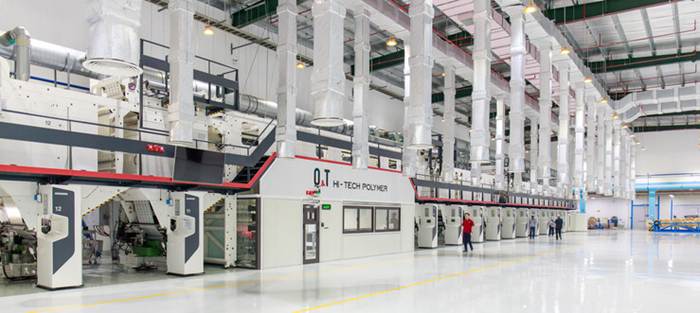
Q&T was established to address both challenges simultaneously: creating a more advanced polymer substrate architecture while also offering central banks a more flexible and sovereign-oriented supply model.
PolySecure® and PolyShielded™: A New Generation of Polymer Technology
At the heart of Q&T’s strategy is PolySecure®, the company’s multi-layer polymer substrate platform.
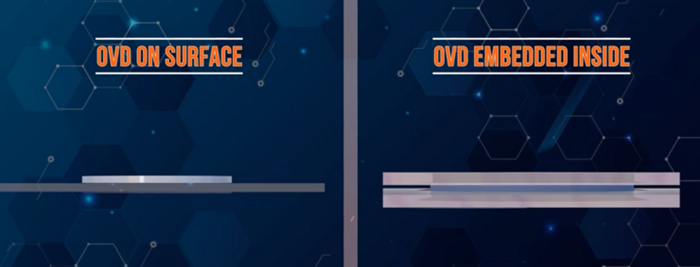
Building on this, PolyShielded™ introduces embedded security features protected inside the substrate.
Unlike conventional polymer banknotes, where most security features sit exposed on the surface and gradually wear down through circulation, PolyShielded™ protects these elements inside the substrate itself. This approach significantly extends the operational lifespan of the note while preserving the integrity of its authentication features.
Q&T describes the concept as “one material system, no mismatch” — meaning that the security features and substrate are engineered together as a unified architecture.
The implications are substantial. Embedded technologies such as KINEGRAM®, machine-readable elements, RFID-compatible technologies, luminescent materials, and future authentication systems can potentially be integrated directly into the substrate while remaining protected from physical wear.
For central banks considering long-term modernization strategies, this creates a future-ready platform capable of evolving alongside next-generation security technologies.
Independent Testing Shows Significant Durability Gains
One of the strongest validation points for PolySecure® came through independent testing conducted by UnderCurrency in 2025.
According to a Benchmark Study, PolySecure® demonstrated a mean lifespan approximately 79.5% longer than standard polymer banknotes under controlled testing conditions. Statistical modelling reportedly explained more than 99% of the variation in the data, reinforcing the consistency of the results.
Importantly, the polymer substrate by Q&T HI-TECH POLYMER CO., LTD reportedly outperformed conventional polymer across every tested category and wear cycle.
The economic implications for central banks could be considerable.
Conventional polymer banknotes already last approximately 2.5 to 4 times longer than cotton paper notes, according to data from institutions such as the Bank of England, Reserve Bank of Australia, and Bank of Canada. If PolySecure® extends durability even further, central banks could potentially reduce replacement volumes, transportation costs, processing expenses, and destruction rates on a large scale.
Q&T argues that durability is not only a technical advantage, but also a strategic sustainability lever. Longer-lasting notes mean fewer notes produced, fewer destroyed, and lower overall lifecycle emissions.
Solving One of Polymer’s Biggest Barriers: Thickness Customization
One of the most strategically important aspects of Q&T’s technology may be its ability to customize substrate thickness — something that has historically been unavailable in conventional polymer banknotes.
Conventional polymer substrates, by contrast, are generally supplied in a standardized thickness. This has forced many central banks considering polymer migration to recalibrate large portions of their cash-handling infrastructure — an expensive and operationally sensitive undertaking.
Q&T’s multi-layer architecture changes that equation.
Because PolySecure® and PolyShielded™ are constructed through bonded layers rather than a single extruded film, the final thickness can be engineered to match the exact dimensions of a country’s existing banknotes.
For central banks, this means the transition to polymer can potentially become a substrate change rather than a full infrastructure recalibration project.
Industrial Readiness and Production Capacity
Q&T’s production facility at Hoa Lac Hi-Tech Park in Vietnam represents a key pillar of the company’s positioning.
Q&T later achieved INTERGRAF 15374:2023 certification, the internationally recognized security management standard for suppliers serving the secure printing industry.
More than 90% of materials used in production are sourced domestically, reducing exposure to foreign exchange volatility and strengthening supply-chain resilience.
Vietnam’s National Banknote Printing Plant reported that Q&T achieved exceptionally low waste rates, reduced ink consumption, and faster delivery schedules during production.
The company is now doubling production capacity in 2026 while maintaining at least 30% reserve capacity to ensure emergency readiness for central bank demand.
Why Central Banks Should Consider Polymer — and Why Q&T Wants to Lead That Transition
Polymer now represents approximately 15% of all banknotes in circulation worldwide, up significantly from previous years, with continued annual growth.
For central banks still operating cotton-paper banknotes, the strategic case for polymer is becoming increasingly compelling:
Dramatically longer circulation life
Lower replacement frequency
Reduced lifecycle costs
Enhanced counterfeit resistance
Improved machine performance
Better environmental sustainability
Reduced logistics and destruction requirements
Stronger durability in humid and demanding climates
Q&T argues that the next phase of polymer adoption will not simply be about switching materials — it will be about choosing a long-term strategic platform.
PolySecure® offers enhanced durability, higher opacity, greater whiteness, and improved stiffness compared with conventional polymer substrates. PolyShielded™ extends this further by embedding and protecting next-generation security technologies directly inside the substrate architecture.
The company’s message to central banks is increasingly clear:
The future of currency is not just about security features or substrate materials — it is about resilience, sovereignty, flexibility, and long-term control.
As polymer banknotes continue to gain global momentum, Q&T is seeking to place itself at the center of that transformation.